Role play
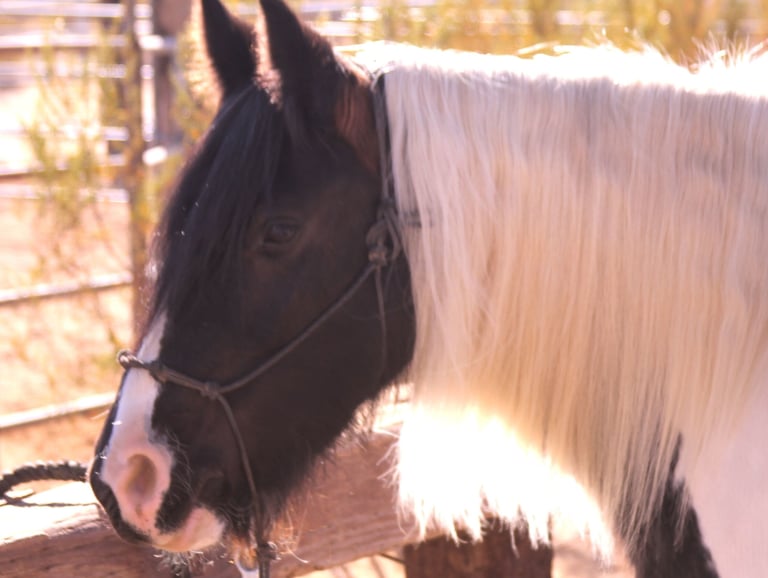
I can't remember a time before I was drawn to horses. My need for them seems to have always been with me, and following that desire led me into a world where horses existed only for humans.
In that world, riding was normal; ownership was love; and control was care. Each horse’s purpose had been decided before I even met them, and all the roles I’d play in relation to them were already written. Looking back, I guess I was typecast. And that’s the part that’s hardest for me to reflect on now: how natural it all felt.
Cleaning stalls to pay for riding lessons and sneaking into stalls to sleep with ponies – that's what horse-crazy young girls did. Grooming at a fancy show barn to get work-release from school – sign me up. Running away to the racetrack because I’m 5 feet tall and have everything to prove – yep. Trail riding home from a bar kind of drunk – check. Notice I'm not talking about the horses here. I’m talking about me, the roles I embodied and the identity inside them.
Reflections
What roles did you inherit in childhood about animals, care or companionship?
How did those roles shape who you believed you were supposed to be?
Identity
I had stopped riding six months earlier, shockingly unable to bear the very same feeling that formerly brought me the most joy. Now I was just keeping, and it felt equally awful.
Finding a new home for my child was what my vet called the next step for my horse to find her best life. But moving Rio a state over to a better climate to live with a gentle young girl and her established horse family felt like an act of selfishness. It allowed me not to be the cause of her standing around in my yard, a glorious and expensive lawn ornament and the cause of the constant twisting in my gut.
Rio Rose followed her new owner onto the trailer and never looked back. I had not freed her. I had only freed myself.
The empty barn, though, the barren corrals outside the kitchen window; everywhere I looked needled at me like the glochids of a cactus I once fell into when I got tossed from a horse who was being chased by a dog. I was processing the accumulated trauma of it all, and it was a hard time. I felt the loss of Rio herself, the weight of her absence and the grief over my own identity crisis.
All the horse stuff is still standing, five years later now, but it holds less power as I move at a snail’s pace away from emotional pain I imbued in it.
Reflections
What identities have you held onto because they felt essential to who you were?
What would it mean to loosen your grip on one of them, even slightly?
The practice of letting go – again
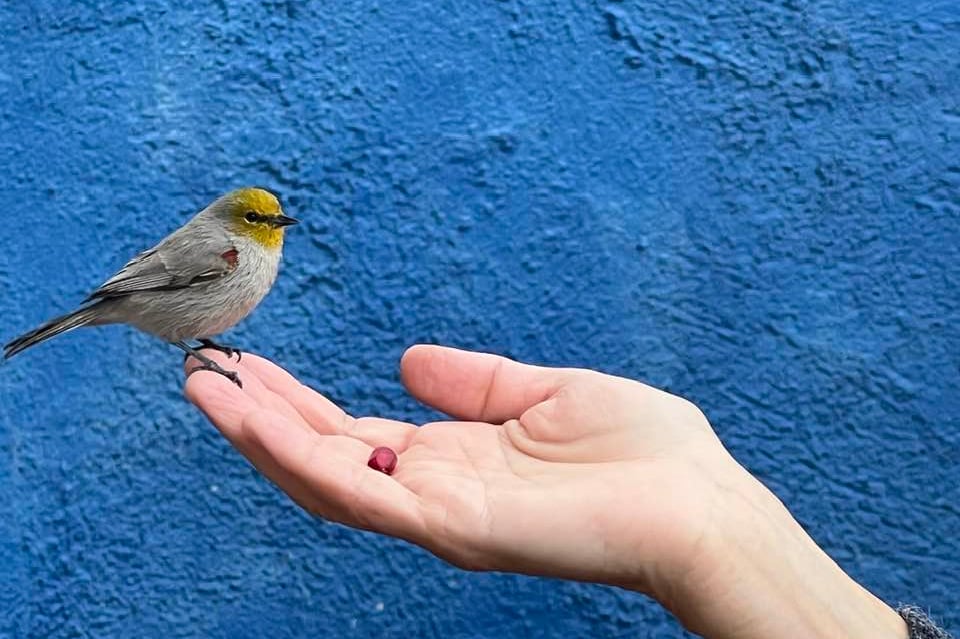
I named him Little Bird. Of course I did; naming is the first way we tether another being to our story.
He was tiny, had a yellow head, and was now accepting individual pomegranate seeds from my hand. On the hammock at first and then from anywhere in the yard where I held my palm up to the sky. Up to five times a day, joining us at the breakfast table and – I won’t be surprised if you don’t believe me – one time waiting for our return at the driveway gate.
He even became comfortable enough to land on the hands of quiet friends who visited us. It was pretty magical all the way around. I couldn’t pet him, control him or own him. Was I using him? How was I doing?
I didn’t have pomegranate trees myself, and as winter came on, I was afraid he’d leave (red flag waving. A neighbor supplied me with enough fruit to overwinter. I froze the seeds in baggies and crossed my fingers. Not only did Little Bird stay, but he built a nest right outside the house. He felt like family. How was I doing?
He spent the first season alone in that man cave, calling at all hours for a mate. I felt sorry for him. The second season I was thrilled to see him dancing through the air with another verdin. The two began to make a nest together, this time in a Joshua tree a bit further from the house. Then the girl verdin disappeared. Little Bird returned to his nest every night before dark, and if they had a nest of babies, it wasn’t on our property.
The next season, Little Bird disappeared for a while. I felt my attachment and the grief of loss – my reminder not to covet what must be free, not to control what must be autonomous. How was I doing?
Then LB reappeared. He had a fledgling in tow, brought to me for the briefest of introduction, and they were both gone again. How was I doing?
That’s when I finally let go. When a young male took up residence in that same palo verde the next year, and then a pair of verdins began reconstructing the old nest in the Joshua tree – and then laid eggs and hatched them and baby verdin were all over the yard, bouncing from creosote to creosote between their parents – I told myself it was LB’s son and his family, but I didn’t not interfere. Not one pomegranate seed I did not.
Reflections
What attachments in your life feel tender, beautiful and also ethically complicated?
What would letting go – or loosening your hold – look like in one of those relationships?
.
Not the end
My reflections have caught us up to the present, but I don’t have a neat ending, and the story doesn’t end here. Relational ethics is a way of being that keeps unfolding, and the alignment of our actions with our values is a living practice.
Thank you for practicing with me.
May all beings be free from suffering and filled with peace.
Final reflections
What part of your own story is asking for attention right now?
What small shift toward alignment feels possible today?